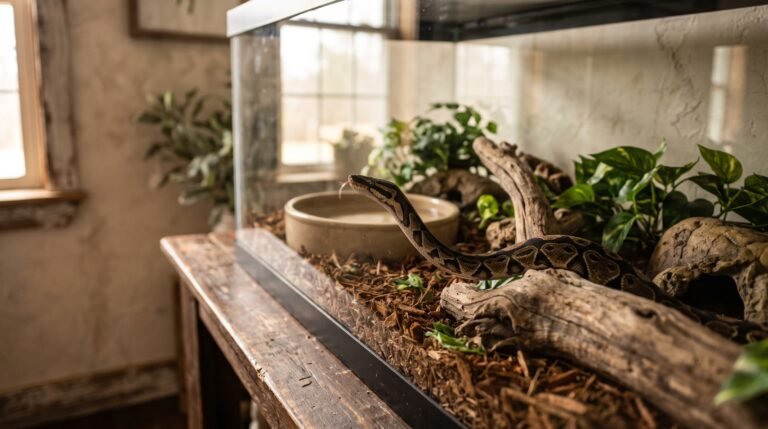
Hatchlings do best in a 10 to 20 gallon tank or a small tub, juveniles in 20 to 40 gallons, and adults need at least a 40 gallon breeder, though many keepers now prefer a 4′ x 2′ x 2′ (120 gallon) enclosure. The right size depends on your snake’s...
Read Article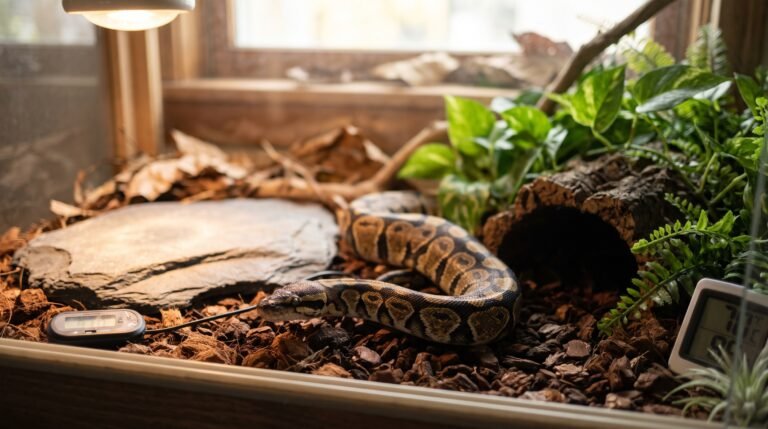
Ideal Ball Python Temperature Ranges for Each Zone
Ball pythons do best with a basking surface of 90 to 95°F (32 to 35°C), a warm side of 88 to 92°F (31 to 33°C), and a cool side of 75 to 80°F (24 to 27°C). Nights can ease down a few degrees, but the enclosure shouldn’t drop much below...
How to Set Up a Ball Python Enclosure Step by Step
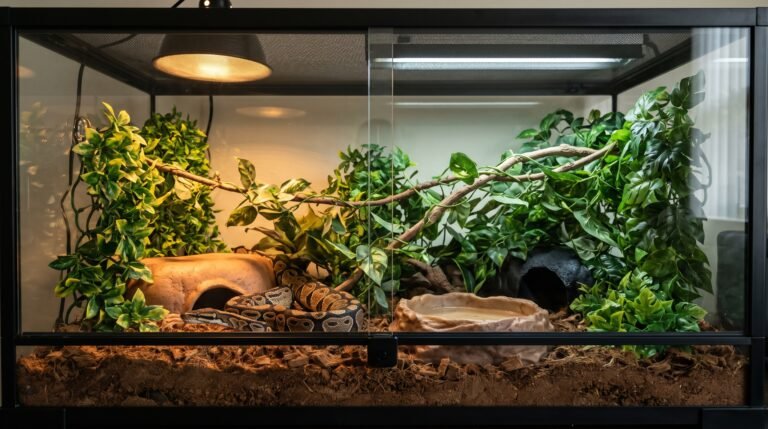
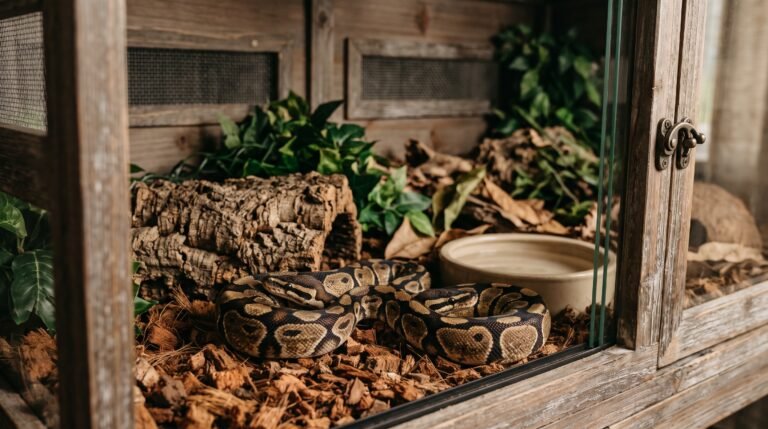
To set up a ball python enclosure, pick a secure, properly sized habitat, build a heat gradient controlled by a thermostat, then add substrate, two hides, a water bowl, and accurate gauges. Run everything for at least 24 hours before your snake moves in. Get those pieces right and daily...
What Do Ball Pythons Eat? Diet and Feeding Basics
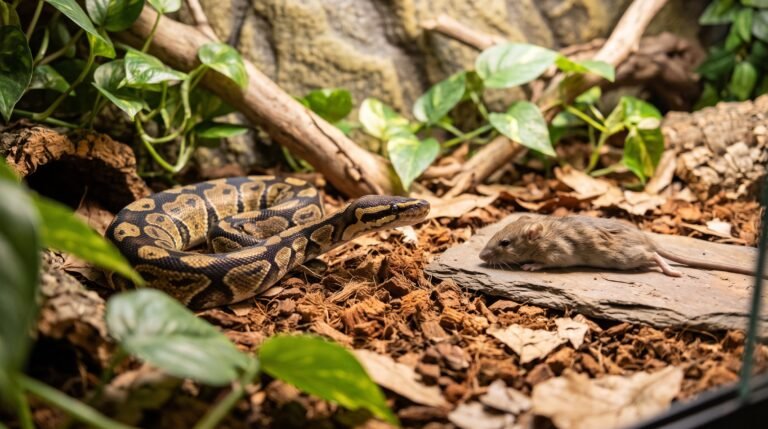
Ball pythons eat whole rodents, mostly mice when they’re young and rats once they’re adults, and most keepers offer them frozen-thawed rather than live. Get the prey type, size, and temperature right, and feeding becomes one of the easiest parts of ownership. Snake feeding looks simple from the outside, but...
Complete Ball Python Care Guide for Beginners
Ball python care comes down to a secure enclosure with a proper heat gradient, steady humidity around 50–60%, frozen-thawed rodents sized to your snake, and calm, consistent handling. Get those four things right and this is one of the most forgiving snakes you can keep. Ball pythons earned their beginner...