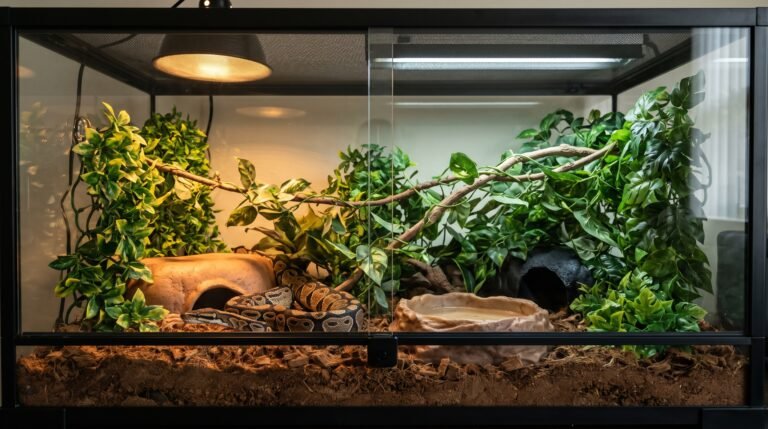
A ball python spends most of its life inside its enclosure, so the setup matters more than almost anything else. The right habitat keeps your snake warm, secure, and comfortable. The wrong one can lead to stress, poor appetite, and health problems that are hard to fix later.
This page gives you an overview of what a good habitat includes. Each section points to a guide with more detail, so you can build your setup one step at a time.
Start With the Enclosure
Before you buy anything, it helps to see the whole picture. Our walkthrough on setting up an enclosure from start to finish shows how heat, hides, substrate, and water fit together in one space. It is a good place to begin if this is your first snake.
Size is the next thing to think about. A tiny tank is not safe for an adult, and a huge one can make a baby feel exposed. Learning what enclosure size suits each stage of growth helps you avoid stress and saves you from buying new gear every few months.
Get the Heat Right
Ball pythons are cold-blooded, so they rely on their surroundings to stay warm. A good habitat has a warm side and a cooler side, which lets the snake choose where it feels best. You can see the temperature ranges to aim for in each part of the enclosure before you start setting up heat sources.
Heat should always be controlled, never left to guesswork. The right tools and a steady routine of checking readings will keep your snake safe from both cold and burns.
Manage Humidity and Substrate
Humidity affects shedding, hydration, and breathing. Too low and your snake may struggle to shed. Too high and the enclosure can turn damp and unhealthy. Our guide to keeping humidity in the right range explains simple ways to raise it and hold it steady.
The floor of the enclosure plays a big part here. Some materials hold moisture well, while others dry out fast or can harm your snake. Knowing which bedding is safe and which to avoid makes it much easier to keep conditions stable.
Give Your Snake Places to Feel Safe
Ball pythons are shy by nature. They feel safest when they can tuck into a snug space and stay out of sight. Understanding how many hiding spots your snake needs and where they work best can reduce stress and make your snake more confident over time.
Lighting is another common question for new keepers. Ball pythons are mostly active at night, but some owners still add special lights for added benefit. If you are unsure, this explanation of whether UVB lighting is worth using can help you decide.
How Habitat Connects to the Rest of Care
A good setup affects almost every part of your snake’s life. Poor conditions are one of the most common causes of illness, so it helps to know the early warning signs covered in our Health section. Your snake’s behavior also tells you a lot about how well the enclosure is working, and the Behavior section helps you read those signals.
When you are ready to buy equipment, the Gear section reviews the heaters, thermostats, and tools that make a setup safe and easy to manage.
Take your time and build the habitat before the snake comes home. A stable, well-planned enclosure is the best gift you can give your ball python.