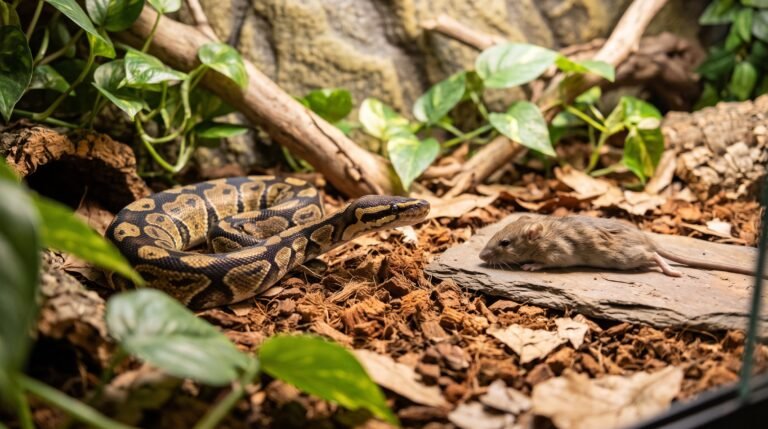
Feeding is one of the most important parts of ball python care. A good routine keeps your snake healthy, growing at a steady pace, and calm. A poor one can lead to obesity, weight loss, or a snake that refuses food for weeks.
This page gives you a clear overview of how feeding works. Each section links to a guide with more detail, so you can build a routine that suits your snake’s age and size.
Know What Your Snake Eats
Ball pythons eat whole rodents. In captivity, that usually means mice for babies and rats for older snakes. If you are new to this, our guide on the basics of diet and feeding explains what a healthy meal looks like and why whole prey matters.
Some keepers wonder which rodent works best as the snake grows. Looking at whether mice or rats make a better staple food can help you choose with confidence.
Set a Routine That Fits Your Snake
How often you feed depends on age. Babies eat more often, while adults can go longer between meals. A steady plan based on how often to feed at each stage of life keeps your snake at a healthy weight without overfeeding.
Prey size matters just as much as timing. A meal that is too large can cause regurgitation, and one that is too small may not be enough. Learning how to match the meal to your snake’s body helps you get it right each time.
Choose Safe Food and Feed It Properly
Most keepers today feed frozen prey because it is safer for the snake and easier to store. If you are weighing your options, this comparison of frozen and live feeding explains the risks of each. Once you have made your choice, it helps to know how to thaw prey the right way so the meal is warm and safe.
When it is time to feed, a step-by-step look at feeding with tongs keeps the process calm for you and the snake. It also lowers the chance of an accidental bite.
When Feeding Does Not Go to Plan
Almost every keeper deals with a missed meal at some point. Stress, shedding, low temperatures, and seasonal changes can all play a part. If your snake turns down food, the common causes and fixes for a snake that will not eat can help you find the reason without panic.
Mistakes happen too, especially early on. Reading about common feeding errors to avoid can save you from problems that are easy to prevent.
How Feeding Connects to the Rest of Care
Appetite is closely tied to your snake’s environment. If the enclosure is too cold or too dry, your snake may stop eating, so it helps to review the Habitat section. Ongoing refusal can also be a sign of illness, which is covered in the Health section.
If you need tongs, scales, or storage items for feeding, the Gear section reviews tools that make mealtime simpler.
A calm, steady feeding routine builds a healthy snake. Start with small, consistent habits, and adjust as your ball python grows.