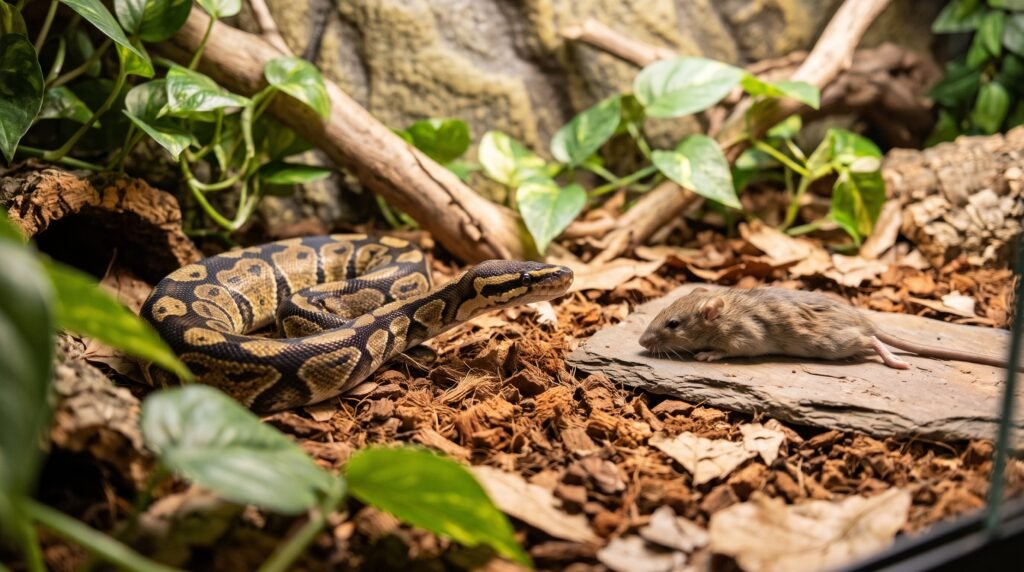
Ball pythons eat whole rodents, mostly mice when they’re young and rats once they’re adults, and most keepers offer them frozen-thawed rather than live. Get the prey type, size, and temperature right, and feeding becomes one of the easiest parts of ownership.
Snake feeding looks simple from the outside, but this is where many first-time owners get stuck. Should you buy mice or rats? How big should the meal be? Is a frozen rodent really okay? This guide covers what ball pythons eat, how to choose prey, how often to feed, and what to avoid.
Here is how a ball python’s diet typically changes as the snake grows:
| Life stage | Typical prey | Rough feeding frequency |
|---|---|---|
| Hatchling | Small mice (some take rat fuzzies) | Every 5 to 7 days |
| Juvenile | Larger mice, moving up to small rats | Every 7 to 10 days |
| Adult | Rats sized to the snake’s girth | Every 10 to 14 days, sometimes longer |
What Ball Pythons Eat in the Wild
Ball pythons are carnivores that swallow whole vertebrate prey. According to the University of Michigan’s Animal Diversity Web, their diet is made up of mammals, and in their native West and Central Africa that mostly means small rodents. Zoo and wildlife sources also note that they occasionally take birds.
This matters for your pet because it shows that your snake doesn’t need variety in the way a omnivore would. It needs whole prey of the right size, offered on a sensible schedule.
What to Feed a Pet Ball Python
In captivity, the staple diet is domestic mice and rats. They’re widely available, nutritionally complete when fed whole, and easy to size correctly.
Mice vs Rats
Hatchlings and small juveniles usually do best on mice. As your snake grows, most keepers switch to rats because a single rat provides a proper meal without needing several mice at once. If you’re deciding between them, the comparison of mice or rats for ball pythons is worth reading. In my view, most adults are simply easier to feed on rats.
Why Whole Prey Matters
Fur, bone, and organs all provide nutrition. Whole prey also covers calcium and other nutrients, which is why most keepers don’t add vitamin powders. If you’re unsure about your snake’s needs, an exotic veterinarian can advise you directly.
Other Prey
Some ball pythons are offered chicks or quail, and a few individuals show a preference for them. Most keepers treat these as occasional extras and stick to rodents as the staple, partly because rodents are easier to source and size consistently.
Frozen-Thawed vs Live Prey
Most veterinarians and experienced keepers recommend frozen-thawed prey. A live rodent can bite or scratch your snake, and even a short feeding session can end in a serious injury. Frozen-thawed prey also stores easily, so you can keep a supply on hand and feed on schedule.
If your snake only accepts live prey right now, supervise the entire feeding and remove the rodent if it isn’t taken within about 15 to 30 minutes. Many snakes can be switched to frozen-thawed with patience, and I’d treat that as the goal.
How to Choose the Right Prey Size
The most common rule is to offer prey about as wide as the thickest part of your snake’s body. Some keepers go slightly larger, up to roughly 1.25 times that width, but anything much bigger than that raises the risk of regurgitation or trouble swallowing. Another guide you’ll see is a meal weighing about 10 to 15 percent of your snake’s body weight.
Size matters more than the label on the package. A “medium rat” from one supplier may differ from another’s, so judge the prey against your snake’s girth rather than the name. For a more detailed breakdown, the guide to ball python prey size goes deeper.
How Often to Feed a Ball Python
Younger snakes grow fast and eat more often, usually every 5 to 7 days as hatchlings. Adults slow down considerably, and most settle into a meal every 10 to 14 days. Some healthy adults are fed even less often, with weeks between larger meals.
Your snake’s body condition is a better guide than a calendar. A healthy ball python looks smoothly rounded, not bony and not bulging. If you want specifics by age and weight, the ball python feeding schedule breaks it down, and the wider collection of ball python feeding articles covers related questions.
How to Prepare and Offer Frozen-Thawed Prey
Preparation takes a few minutes, but it makes a real difference to whether your snake accepts the meal.
- Thaw the rodent fully, either in the refrigerator overnight or in a sealed bag in warm water.
- Warm it to roughly 95 to 100°F (35 to 38°C), since ball pythons hunt using heat-sensing pits along their lips and a cold rodent often gets ignored.
- Dry it off and hold it with feeding tongs by the tail or hindquarters.
- Offer it gently, with a little movement to trigger a strike.
Never microwave prey, because it heats unevenly and can leave hot spots or cook the meat. Never refeed a rodent that has been sitting out for long. A meal that fails to get accepted is best discarded rather than re-frozen.
Things Not to Feed a Ball Python
Ball pythons don’t eat fruit, vegetables, eggs, or insects, and offering them serves no purpose. I’d also avoid wild-caught rodents, which can carry parasites and may have been exposed to poison.
Beyond food, keep a clean bowl of fresh water in the enclosure at all times.
When Feeding Doesn’t Go as Planned
Refusing a meal is common and often harmless. Ball pythons may skip food during a shed, when temperatures are off, or simply because they aren’t hungry. Before worrying, check that your enclosure holds the proper temperature ranges and that your snake isn’t about to shed. The detailed shedding signs and stages explain what to look for.
If refusal drags on, the guide to a ball python not eating covers causes and fixes. Rapid weight loss, lethargy, or other worrying symptoms are a reason to look into signs of illness and talk to a reptile vet.
Frequently Asked Questions
Can ball pythons eat fruit or vegetables?
No. Ball pythons are strict carnivores and can’t digest plant matter well. Offering produce won’t provide any nutritional benefit.
Do ball pythons need vitamin or calcium supplements?
Most don’t, as long as they’re eating whole prey. Some keepers dust prey occasionally, but it’s generally unnecessary. An exotic vet can tell you if your snake is an exception.
Can I feed my ball python wild mice or rats?
It isn’t recommended. Wild rodents can carry parasites and diseases, and they may have eaten poison. Rodents from a reputable breeder or supplier are a safer choice.
Final Thoughts
A ball python’s diet is wonderfully simple. Offer appropriately sized whole rodents, ideally frozen-thawed, warm them properly, and keep to a schedule that matches your snake’s age and condition. If you’re still setting up your snake’s home, the full ball python care overview ties feeding in with the rest of husbandry.
Your next step is simple. Check your snake’s current body condition and compare the size of its last meal to the widest part of its body. Is your ball python on the right prey size, or is it time to adjust? Share your experience in the comments, and browse more of the feeding articles to keep your snake thriving.