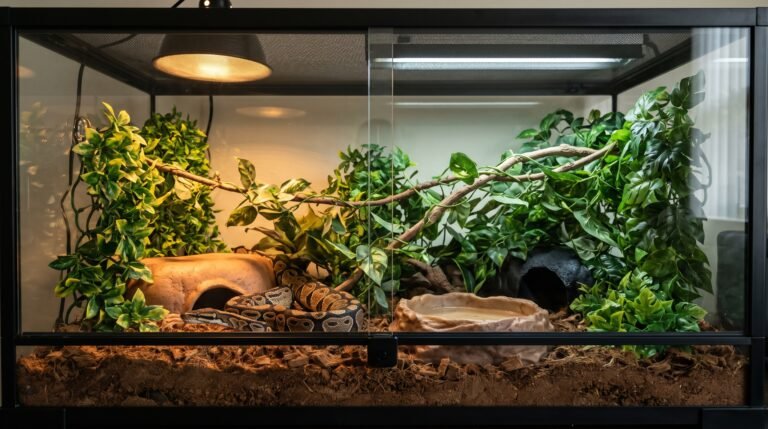
To set up a ball python enclosure, pick a secure, properly sized habitat, build a heat gradient controlled by a thermostat, then add substrate, two hides, a water bowl, and accurate gauges. Run everything for at least 24 hours before your snake moves in. Get those pieces right and daily...
Read Article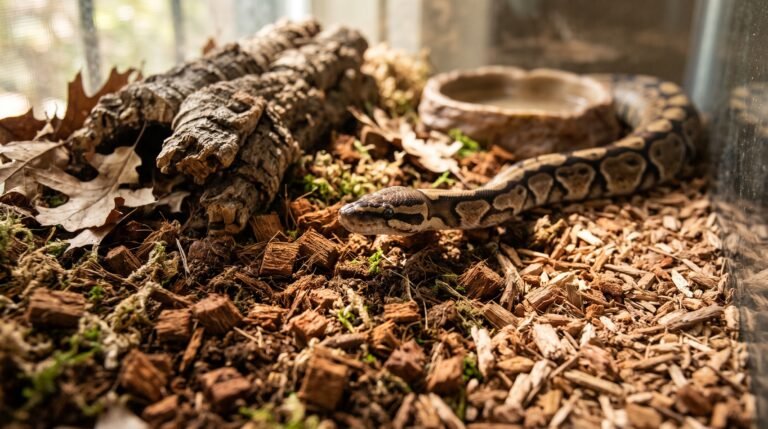
What Substrate to Use for Ball Pythons and What to Avoid
The best substrates for ball pythons are cypress mulch, coconut husk chips, and coco fiber blends, with aspen or paper-based bedding working well in some setups. Cedar, pine, sand, and corncob are the ones to avoid, since they can irritate the respiratory system, block the gut, or turn moldy fast....
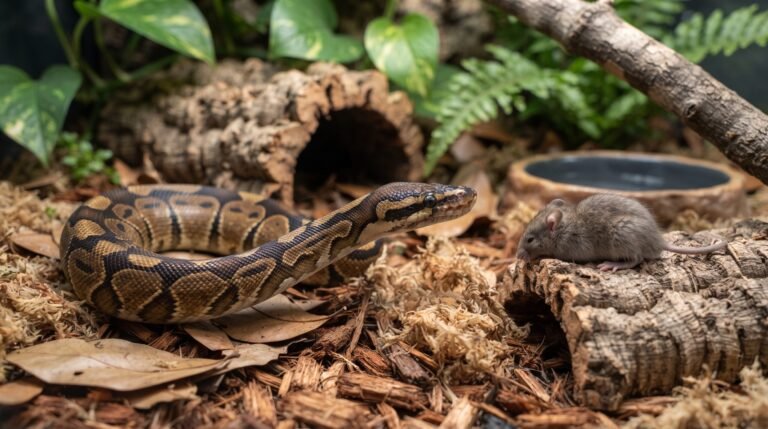
How to Choose the Right Prey Size for a Ball Python
The right ball python prey size is a thawed rodent no wider than the thickest part of your snake’s body, which usually works out to roughly 10 to 15 percent of its body weight. You then adjust up or down based on how your snake looks and how it handles...
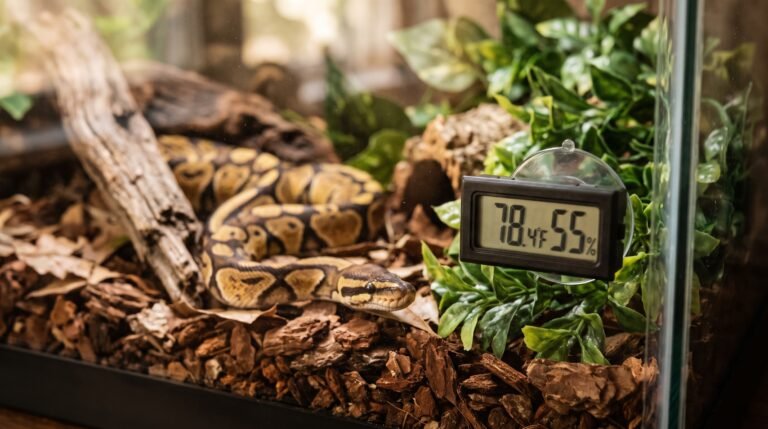
6 Best Hygrometers and Thermometers for Ball Pythons
The best hygrometer and thermometer setup for a ball python gives you accurate temperature and humidity readings from both the warm side and the cool side, ideally with alerts when something drifts. For most keepers I recommend the Govee H5075, while probe-based models like the Inkbird IBS-TH2 Plus and Zoo...
Ball Python Feeding Schedule and How Often to Feed
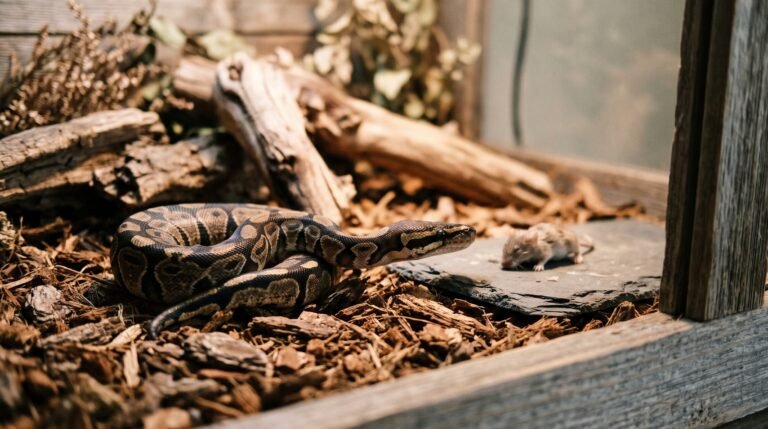
Most ball pythons do well on a meal every 5 to 7 days as hatchlings, weekly as juveniles, every 10 to 14 days as young adults, and every 14 to 21 days once fully grown. Those numbers are a starting point, and your snake’s weight, body shape, and appetite should...
5 Best Reptile Thermostats for Ball Python Enclosures
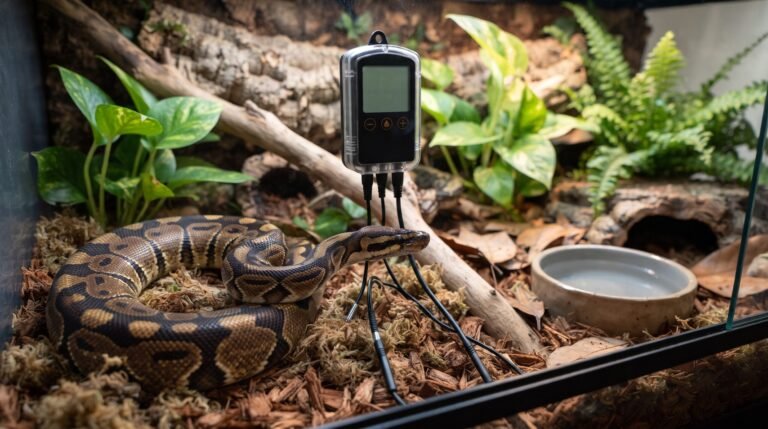
The best reptile thermostat for most ball python keepers is the Inkbird ITC-308 for dependable on/off control. The Herpstat 1 is the pick if you want proportional control that holds temperatures steadier. Whichever you choose, a thermostat is the one heating accessory you shouldn’t skip, because it stops a heat...
5 Best Heat Mats for Ball Pythons Reviewed and Compared
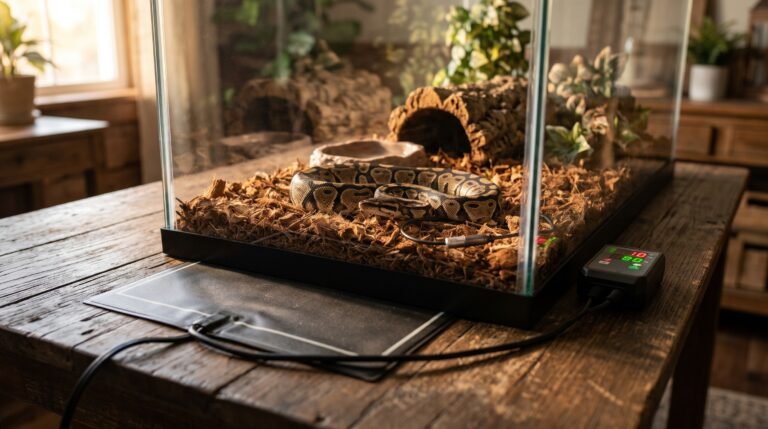
The best heat mats for ball pythons are the Zoo Med ReptiTherm for all-around reliability and the Zilla Heat Mat for its built-in temperature cap. Any of the five below is only safe on a thermostat, stuck to the outside of a glass enclosure, with a hide and substrate between...
Ideal Ball Python Humidity Levels and How to Raise Them
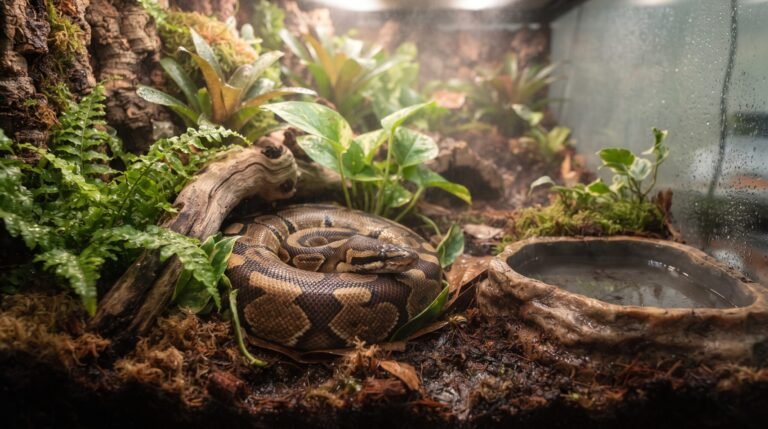
Most ball pythons do best at about 55–65% humidity day to day, rising to around 65–70% while they shed. You raise it with a moisture-holding substrate, a decent-sized water bowl, a damp humid hide, and light misting, while keeping enough airflow to stop the enclosure from turning stale and soggy....
What Size Tank Does a Ball Python Need at Each Age?
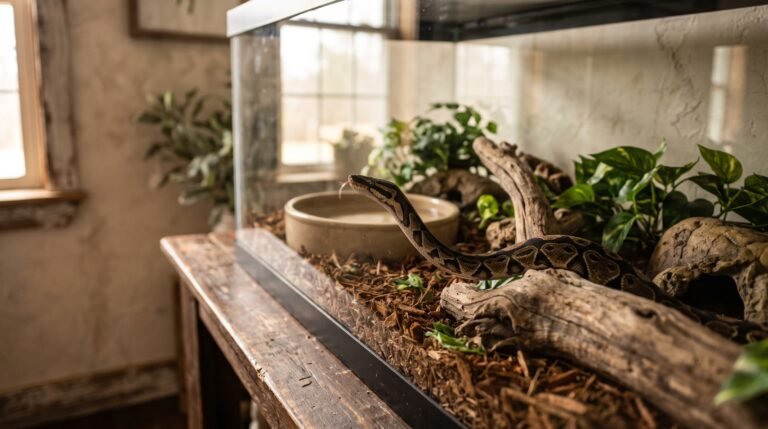
Hatchlings do best in a 10 to 20 gallon tank or a small tub, juveniles in 20 to 40 gallons, and adults need at least a 40 gallon breeder, though many keepers now prefer a 4′ x 2′ x 2′ (120 gallon) enclosure. The right size depends on your snake’s...
Ideal Ball Python Temperature Ranges for Each Zone
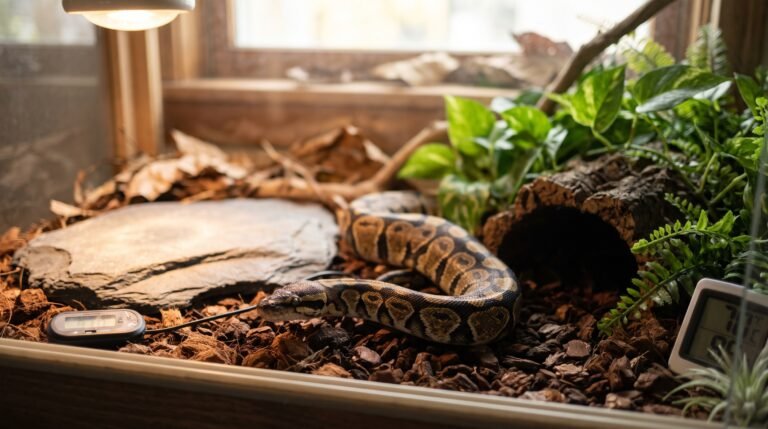
Ball pythons do best with a basking surface of 90 to 95°F (32 to 35°C), a warm side of 88 to 92°F (31 to 33°C), and a cool side of 75 to 80°F (24 to 27°C). Nights can ease down a few degrees, but the enclosure shouldn’t drop much below...
How to Set Up a Ball Python Enclosure Step by Step
To set up a ball python enclosure, pick a secure, properly sized habitat, build a heat gradient controlled by a thermostat, then add substrate, two hides, a water bowl, and accurate gauges. Run everything for at least 24 hours before your snake moves in. Get those pieces right and daily...